Waterproofing compliance has changed significantly in recent years.
Under the Building Safety Act, manufacturers, designers and specifiers are now expected to provide far greater levels of evidence, accountability and technical oversight than ever before.
That’s why terms like BDA certification, BBA certification, UKAS-accredited testing and CSSW waterproofing are becoming increasingly important.
But while these terms are often grouped together, they actually refer to very different parts of the compliance process, from product testing and certification through to waterproofing design responsibility and professional liability.
Successful waterproofing projects depend on all of them working together.
Why Waterproofing Manufacturers Face Greater Scrutiny Today
Historically, many companies within the waterproofing sector operated primarily as distributors of third-party systems.
But once a company becomes a manufacturer in its own right, the level of responsibility changes significantly.
Manufacturers are no longer simply supplying systems developed elsewhere. They are directly responsible for product performance, manufacturing consistency, quality control, technical compliance and long-term durability.
That shift brings far greater scrutiny from developers, principal designers, warranty providers, building control and insurers.
Today, organisations such as NHBC and LABC increasingly expect robust independent testing and certification evidence before waterproofing systems can be approved for use on projects.
The First Stage: In-House Product Testing
Before any third-party certification begins, responsible manufacturers typically undertake their own internal testing and product evaluation processes. The test criteria are often determined by the agrément certification providers. We, as a manufacturer, will then approach to understand the base level testing that is required.
This early-stage assessment helps manufacturers understand how products behave in real-world site conditions before entering independent testing programmes.
Internal testing may include:
- Product application assessment
- Adhesion evaluation
- Compatibility checks
- Installation methodology reviews
- Curing performance
- Manufacturing consistency
- Internal quality control procedures
While this does not replace third-party verification, it provides an important foundation for later certification.
Where UKAS-Accredited Testing Fits In
Once products move beyond internal development, independent testing becomes essential.
Most certification bodies require testing to be carried out by UKAS-accredited laboratories operating to recognised standards such as ISO/IEC 17025.
UKAS itself does not certify waterproofing products directly. Instead, it confirms that testing laboratories are competent, controlled and independently assessed.
For waterproofing manufacturers, the process typically works as follows:
- A manufacturer develops a product or system
- An Agrément certification body defines the testing criteria
- Independent testing is carried out by UKAS-accredited laboratories
- The evidence is reviewed as part of the certification process
Testing often includes:
- Adhesion and pull-off strength
- Water and gas permeability
- Durability
- Compressive strength
- Elongation performance
- Chemical resistance
For manufacturers, this independent evidence is now essential not only for certification, but also for specification acceptance, warranty approval and broader Building Safety Act compliance.
Understanding BDA and BBA Certification
Once independent testing has been completed, manufacturers can then pursue Agrément certification.
Within the UK waterproofing sector, two increasingly recognised Agrément providers are:
- The British Board of Agrément (BBA)
- Kiwa BDA Agrément
Agrément certification is often misunderstood as simply being a product test certificate. In reality, the process is far more involved.
Certification bodies assess:
- Independent test evidence
- Manufacturing processes
- Factory production control
- Quality management systems
- Intended applications
- Installation methodology
- Technical documentation
Importantly, certification does not end once approval has been granted. Manufacturers are typically subject to ongoing audits, surveillance assessments and production reviews to ensure consistency is maintained.
For specifiers and warranty providers, this provides a higher level of confidence than relying solely on manufacturer claims.
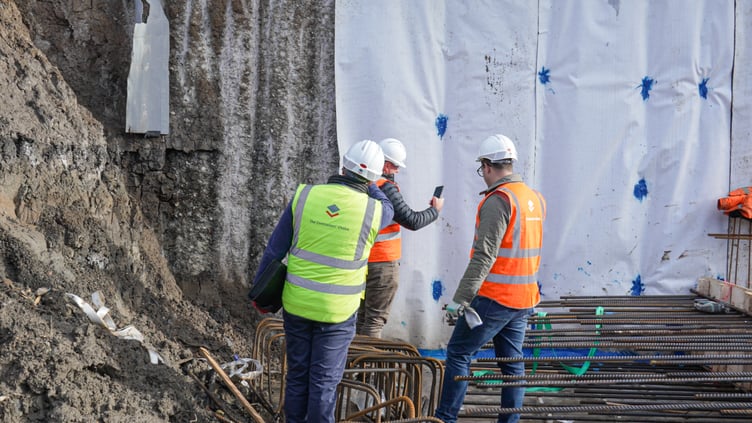
CSSW Waterproofing and Design Responsibility
CSSW is one of the most misunderstood areas within the waterproofing industry.
The qualification (Certified Surveyor in Structural Waterproofing) is widely recognised as a benchmark for waterproofing competence and understanding of BS8102 principles.
However, employing CSSW-qualified individuals is not the same as accepting formal waterproofing design liability.
A company may:
- Employ CSSW-qualified individuals
- Provide technical advice
- Support specifications
- Review waterproofing strategies
- Assist with compliance discussions
…without formally accepting waterproofing design liability.
That distinction matters more than many realise.
As projects become more complex, developers and principal contractors increasingly expect coordinated waterproofing and gas protection strategies that align with:
- BS8102:2022
- BS8485:2019
- Warranty provider requirements
- Building Safety Act obligations
The Difference Between Advice and Liability
The highest level of responsibility within waterproofing is not product supply or technical advice; it is accepting formal design liability.
Many manufacturers may hold CSSW qualifications and professional indemnity insurance. Far fewer are willing to formally undertake:
- Waterproofing design responsibility
- Gas protection design integration
- PI-backed design liability
- Collateral warranty obligations
- Full design accountability within the construction process
Under modern building safety legislation, accountability throughout the design chain is receiving far greater scrutiny.
Developers, principal contractors and warranty providers want clear answers to a few key questions:
- Who designed the waterproofing system?
- Who carries the liability?
- Is the design professionally insured?
- How has compliance been coordinated across the project?
Because successful waterproofing is no longer just about supplying certified products; it’s about delivering coordinated, compliant and professionally accountable design solutions.
Premcrete: Expertise with a CSSW-qualified team
At Premcrete, certification forms part of a wider commitment to technical accountability, quality management and long-term system performance.
Through Prem360, we support a more integrated approach to waterproofing and gas protection, combining technical expertise, compliant design and ongoing project support within a single coordinated framework.
Our CSSW-qualified team supports projects from early-stage specification through to compliant waterproofing and gas protection design, helping ensure systems align with both regulatory requirements and real-world site conditions.
Because waterproofing systems don’t operate in theory, they operate on live construction sites, under pressure, across varying ground conditions and within increasingly demanding compliance frameworks.
Why Multiple Layers of Assurance Matter
No single certification guarantees waterproofing success on its own.
Effective compliance relies on several layers working together:
- In-house product validation
- UKAS-accredited testing
- BDA certification and BBA certification
- Factory production control
- CSSW waterproofing competence
- Professionally insured design responsibility
Each layer performs a different function, but together, they help provide:
- Regulatory compliance
- Specification confidence
- Warranty acceptance
- Technical accountability
- Long-term waterproofing performance
The Bottom Line
Waterproofing compliance has evolved far beyond simple product supply.
Today, successful systems rely on independently tested products, robust certification, competent design and clear accountability throughout the construction process.
BDA and BBA certification, UKAS-accredited testing, CSSW competence and professional design responsibility all play different roles, but increasingly, modern projects require all of them working together.
The industry is moving towards far greater scrutiny and accountability. Developers, insurers and regulators no longer want product claims alone; they want evidence, coordination, and clearly defined responsibility.
Because modern waterproofing is no longer just about proving products work.
It is about proving the entire system can stand up to scrutiny.
Arrange a 15–30 minute technical design workshop to discuss your project with one of our CSSW waterproofing experts.



-1.jpg)